
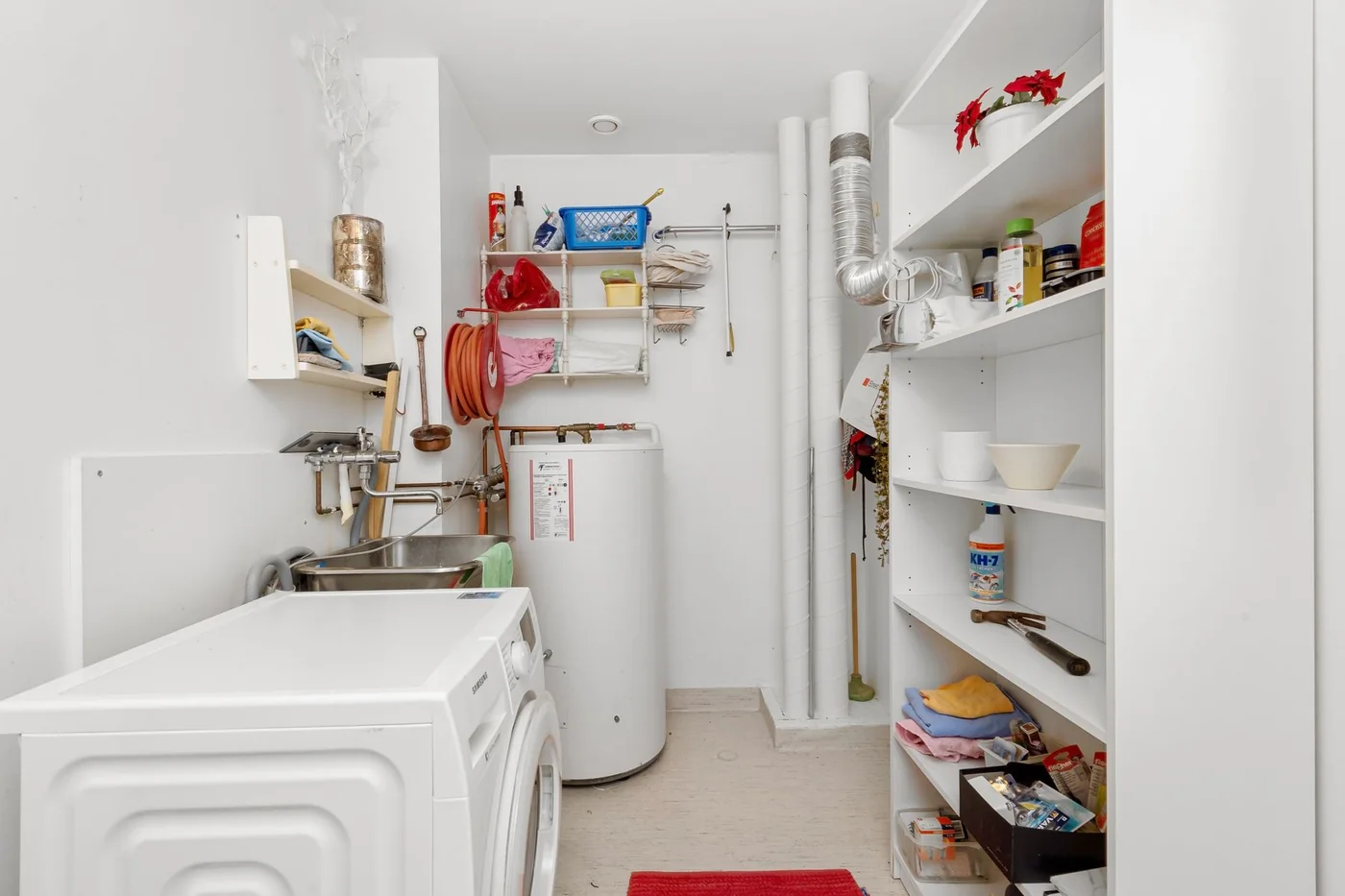
Why the puddle can be misleading
Water follows the path of least resistance. A drip at a top connection can run down the side or piping and collect at the bottom. A drain valve, relief-valve discharge pipe, nearby plumbing, or condensation can also leave moisture near the base. The wettest spot on the floor is not always where the leak began.
Manufacturers note that a leak through a corroded tank shell often means the tank must be replaced. But a puddle alone cannot confirm shell corrosion. The visible source and the heater’s condition need to be checked.
What the location may suggest
Water around a pipe or fitting may point to a connection. Moisture at the end of a discharge pipe may involve a safety valve. Water coming through the tank body is more concerning for tank failure. These are clues, not a diagnosis; water can run along surfaces before dripping to the floor.
Do not remove the heater’s outer panels or insulation to look for the source. If the floor is wet near wiring or controls, keep clear. If you smell gas or hear hissing, leave and call your gas utility or 911 from a safe location.
Repair or replacement depends on the source
An accessible fitting or valve may be repairable. Corrosion through the tank shell usually is not a durable patch repair. If replacement is recommended, ask for the reason and for a written estimate showing the proposed unit, labor, removal, disposal, permits, and any required changes to the installation.
HeaterFixer is a call-connection service, not a plumbing contractor. Calls may connect with an independent plumbing company, which handles diagnosis, work, scheduling, and pricing.
Related leak information
For a dripping temperature-and-pressure relief pipe, see why that pipe must stay open. If the leak is active, review safe first steps for a leaking water heater.